
Renters insurance is one of the cheapest protections in a rental, and one of the most commonly skipped. Tenants assume the landlord’s insurance covers them, and landlords assume tenants have their own coverage. In a South Florida rental, with hurricanes, summer storms, and plumbing and A/C leaks, that gap gets expensive fast. This guide explains who needs what, what it costs, and how to handle it from both sides of the lease.
Is Renters Insurance Required in Florida?
No state law requires it. Insurify, RentSpree, and a Palm Beach Post guide all state that renters insurance is not legally required in Florida, and that landlords can require it as part of the lease or rental application. In other words, whether a tenant must carry it comes down to what the lease says.
That makes the lease the control point. A landlord who wants tenants insured should say so in writing, and a tenant who is unsure should read the lease before assuming either way.
What the Landlord’s Insurance Does Not Cover
A landlord’s policy insures the building. It does not protect a tenant’s furniture, clothing, electronics, or other belongings, according to RentSpree and the Palm Beach Post. If a pipe bursts, a fire starts in the unit above, or a storm damages the roof, the landlord’s policy pays to repair the structure. The tenant’s replacement costs, and any hotel bills, are the tenant’s problem unless the tenant has their own policy.
What a Renters Policy Covers
Insurify describes three core coverages:
- Personal property. Replaces belongings such as clothing, furniture, and electronics after covered losses, including windstorms and water damage.
- Liability. Covers claims if a guest is injured or the tenant accidentally damages someone else’s property, for example a kitchen fire that spreads to a neighboring unit.
- Loss of use (additional living expenses). Pays for temporary housing if the home can’t be lived in after a covered loss.
What It Costs in Florida
Insurify puts the Florida average at about $18 a month ($216 a year) for a policy with $30,000 in personal property coverage and $100,000 in liability coverage (updated April 2026). RentSpree and the Palm Beach Post both cite a typical range of $12 to $25 a month, close to the national average of about $19. Your actual price depends on the coverage amounts, deductible, building age, and claims history, so get quotes rather than relying on the average.
Flood and Hurricane Damage: The Gap That Surprises Renters
Standard renters policies include windstorm as a covered cause of loss for belongings, but they do not cover flooding. Both Insurify and the Palm Beach Post say flood needs a separate policy, and the Post points renters to the National Flood Insurance Program and FEMA’s FloodSmart site. In Palm Beach County, where storm surge and heavy-rain flooding are real risks, tenants in lower-lying areas should price a flood policy for their belongings alongside the renters policy.
Hurricane season also raises the value of loss-of-use coverage. If a storm leaves a unit unlivable, that coverage is what pays for somewhere to stay. Our hurricane season checklist covers the owner-side preparation that goes with it.
For Landlords: How to Require Renters Insurance
If you want tenants insured, put it in the lease. A practical clause covers:
- A minimum liability limit. The common policy carries $100,000 in liability coverage, which is a reasonable floor to name. Nothing in Florida law sets a minimum, so the number is yours to choose.
- Proof of coverage at move-in and at each renewal, and what happens if a policy lapses.
- Who buys it. Tenants typically buy and hold their own policy. Say whether you need to approve the insurer or only receive proof of coverage.
- A reminder about flood. State that the policy does not need to include flood, or that you recommend it, so expectations are clear.
Ask the tenant’s insurer whether you can be listed as an interested party so you are notified if the policy is cancelled. Then keep your own coverage in order. Landlord insurance has its own requirements and gaps. Baselane notes that traditional property insurance doesn’t include flood damage, and Momentum Realty reports that hurricane deductibles of 2% to 5% of insured value are standard in Palm Beach County. If you have a mortgage, your lender sets additional insurance requirements, so check your loan documents.
For Tenants: How to Pick a Policy
- Count your belongings. Walk through the home with your phone and record a video of what you own. If you have to file a claim, that inventory saves hours.
- Choose liability first. $100,000 is the typical starting point; ask your agent whether your assets justify more.
- Ask about the deductible, especially for windstorm. A low premium can come with a high deductible.
- Price flood separately. Ask about an NFIP policy for contents if you rent a ground-floor or low-lying unit.
- Give your landlord proof. Many landlords require it, and a lapsed policy can put you in breach of the lease.
How It Works Through the TPG Portal
TPG’s tenant portal lets residents “purchase or update renter’s insurance” alongside paying rent online, submitting maintenance requests, and reviewing their lease, from a phone or computer. Residents can sign in through the Residents & Landlords Portal page. Ask your property manager what your lease requires and which coverage levels it expects.
Frequently Asked Questions
Is renters insurance required by law in Florida?
No. Florida law doesn’t require it, but landlords can require it in the lease or rental application.
Does my landlord’s insurance cover my belongings?
No. A landlord’s policy covers the building, not the tenant’s furniture, clothing, or electronics.
How much does renters insurance cost in Florida?
About $18 a month on average for $30,000 in personal property and $100,000 in liability coverage, with typical quotes ranging from $12 to $25 a month.
Does renters insurance cover hurricane damage?
It covers windstorm damage to your belongings and temporary housing costs if the home becomes unlivable, but not flood. Flood needs a separate policy. Check your policy for any separate windstorm or hurricane deductible.
Can a landlord require renters insurance in Florida?
Yes. It is allowed as a lease or application condition. The landlord should state the requirement and the proof of coverage needed in writing.
What if my tenant’s policy lapses?
Your lease should say that a lapse is a violation and what notice you will give. Follow the notice rules in Chapter 83 before treating it as one, and talk to your manager or a Florida attorney first.
Questions About Insurance Requirements in Your Lease?
TPG Property Management helps owners set lease terms that fit their property and helps residents keep their coverage current through the portal. Submit the form for a free consultation.
TPG Property Management, Royal Palm Beach, FL | (561) 875-5110
Keep Reading
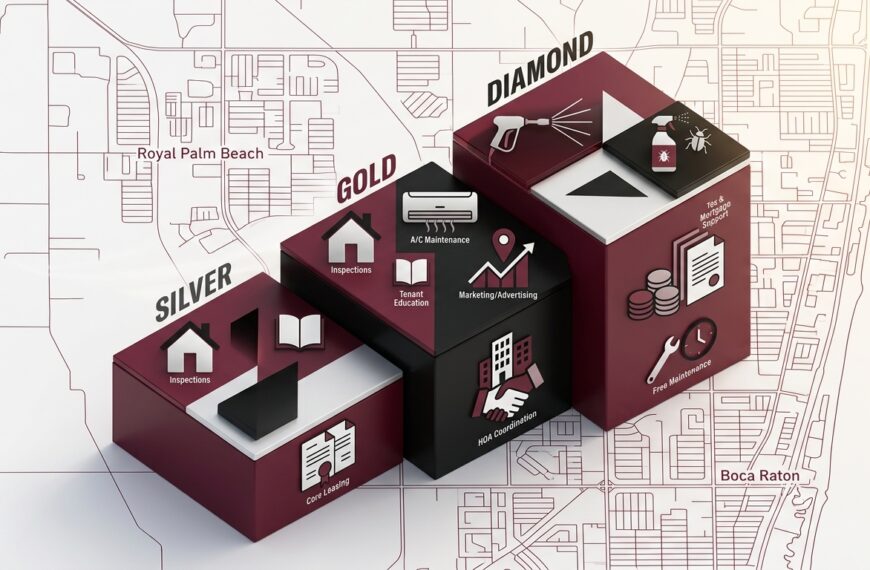
- Silver vs. Gold vs. Diamond: Choosing the Right Property Management Plan for Your Rental: Diamond adds support with property insurance payments for owners.
- Snowbird Season Rentals: How to Maximize Occupancy in West Palm Beach: if you rent to seasonal tenants, build the insurance requirement into the lease up front.
- Moving to West Palm Beach County: Your Essential 30-Day Family Relocation Checklist (Treasure Property Group): setting up renters insurance is one of the first moving-day tasks for anyone relocating to the county.
Sources: Insurify: Best Renters Insurance in Florida (updated Apr. 2026) · RentSpree: Renters Insurance in Florida (updated Aug. 2026) · Palm Beach Post: What if the house I rent is damaged in a hurricane? · Momentum Realty: Investing in Palm Beach County (Sept. 2026) · Baselane: Long-Distance Landlord in Florida · TPG Residents & Landlords Portal
This post provides general information and is not insurance, legal, or financial advice. Prices and coverage vary by insurer and policy; get quotes and read your policy and lease. Several sources sell insurance or insurance-related services and are cited as industry estimates.