

Why Vacation Rental Owners Carry Extra Storm Risk
A long-term landlord rides out hurricane season with one relationship to manage — the tenant already living in the unit. A vacation rental owner is juggling several at once: whoever’s checked in when a storm threatens, whoever’s arriving in the days after, and the property itself, often sitting empty between guests with no one on-site to notice a leak, a loose shutter, or a tree limb resting on the roofline. That gap between bookings is exactly when small storm damage turns into a large claim.
Hurricane season runs June 1 through November 30, and NOAA’s 2026 outlook calls for a below-normal season — 8 to 14 named storms, 3 to 6 hurricanes, and 1 to 3 major hurricanes, with developing El Niño conditions expected to limit overall activity. “Below-normal” is not “storm-free,” though, and forecasters are consistent on one point every year: it only takes one storm making landfall near your property to matter. Here’s how to prepare a Palm Beach County vacation rental — and your guests — before one does.
Before the Season: Property & Documentation
- Confirm your evacuation zone. Palm Beach County’s Know Your Zone tool tells you exactly which evacuation zone your property sits in — check it now, not while a storm is 48 hours out, and pass the zone number along to any co-host or caretaker who may need to secure the property on your behalf.
- Inspect and reinforce. Walk the roof, soffits, and any accordion or panel shutters for wear before June. Impact-resistant windows and permanent storm shutters are the highest-value upgrade for a rental that sits unoccupied for stretches — you can’t count on a guest to put up plywood correctly, or at all.
- Photograph and video everything. A full walkthrough of the interior and exterior, dated and stored off-site (cloud storage, not just your phone), is the single most useful thing you can do before a storm for a clean, fast insurance claim afterward.
- Stock a storm kit for the property, not just yourself. Battery-powered radio, flashlights, a first-aid kit, and a generator if the unit doesn’t have one already — guests riding out a watch or warning need these on-site, not on a shopping list during a run on Publix.
- Know your tax-exempt purchase window. Florida moved away from short, temporary disaster-supply tax holidays for 2026 in favor of permanent, year-round sales tax exemptions on many core hurricane-kit items — nonperishable food, water, medications, and batteries among them. A few previously exempt items (flashlights, candles, coolers, some pet supplies) were dropped from the list under the new framework, so check current guidance at floridarevenue.com/DisasterPrep before you restock rather than assuming last year’s list still applies.
Booking Policy & Guest Communication
This is the piece long-term rentals don’t have to think about, and it’s where most short-term-rental storm problems actually originate.
- Write your storm policy into the listing before the season starts, not after a guest is already asking. Spell out what happens to a reservation if a mandatory evacuation order is issued for your zone — refund, credit, or rebooking — so you’re applying a documented policy instead of improvising one over text message.
- Push proactive updates once a watch or warning is issued for Palm Beach County — evacuation zone, nearest shelter, and a clear instruction to leave if ordered to. Guests on vacation are often unfamiliar with Florida storm protocol and won’t think to check the National Hurricane Center on their own.
- Have a same-day contact plan for a guest currently checked in when a storm accelerates — a local co-host, cleaner, or your property manager who can reach the unit in person if you can’t.
During the Storm
- Follow evacuation orders for your zone immediately if one is issued — don’t wait to see how the forecast track shifts.
- Secure or remove loose furniture, grills, and decor from patios, balconies, and pool decks; anything left outside becomes a projectile in sustained wind.
- Shut off gas and water service if the property will sit vacant through the storm, and unplug major appliances and electronics.
- Keep guest communication going even after evacuation — a short “shelter in place until further notice” or “evacuation lifted” message matters more than it seems like it would in the moment.
After the Storm
- Don’t allow guests or cleaning staff back into the unit until you or your manager has confirmed it’s safe — downed lines and structural damage aren’t always visible from the street.
- Document any damage against your pre-storm photos and file your claim promptly; insurers move faster on claims with clear before/after evidence.
- Line up your contractor relationships before hurricane season, not during it — the good ones book out fast the week after a storm makes landfall anywhere in South Florida.
Frequently Asked Questions
Do I need separate insurance for a vacation rental versus a standard rental property? Often, yes. Many standard landlord policies exclude or limit coverage for short-term/transient use, and lenders and insurers may require a specific short-term-rental endorsement. Review your policy language directly with your carrier — don’t assume a long-term-rental policy covers guest turnover and short-stay bookings the same way.
Should I cancel bookings ahead of a possible storm, or wait for an official warning? Wait for official guidance from the National Hurricane Center and Palm Beach County Emergency Management before cancelling — acting on an early forecast cone that shifts can mean refunding guests unnecessarily. Your written storm policy should specify that cancellations/credits trigger on an official watch, warning, or evacuation order, not a five-day forecast.
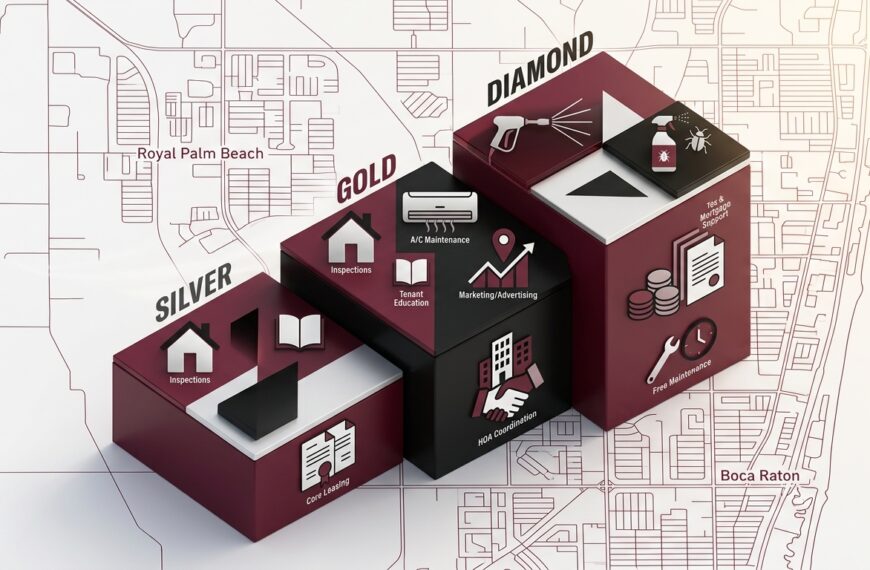
Does TPG handle storm prep for the vacation rentals it manages? Yes — seasonal maintenance, including A/C service and exterior upkeep, is part of TPG’s Gold and Diamond plans, and our local vendor network means faster dispatch for storm shutters, debris removal, and post-storm inspection than an owner coordinating it alone from a distance.
Let TPG Carry the Storm-Season Workload
Hurricane prep is one more thing on a long list for an owner already juggling guest turnover, pricing, and maintenance. TPG Property Management handles both long-term and short-term/vacation rentals across Palm Beach County, with local vendor relationships that mean your storm shutters, generator checks, and post-storm inspections happen on schedule — whether or not you’re in the state when the next watch is issued. Contact TPG Property Management to talk through storm-season coverage for your rental.
TPG Property Management — Royal Palm Beach, FL | (561) 875-5110
Keep Reading
- Snowbird Season Rentals: How to Maximize Occupancy in West Palm Beach — hurricane season ends right as booking season for your next snowbird tenants begins.
- Silver vs. Gold vs. Diamond: Choosing the Right Property Management Plan — see which tier includes the seasonal maintenance this checklist depends on.
- Building in Charlotte County: CBS, No-HOA Lots, and Waterfront Homes (QR Developments) — concrete block construction and storm-resilient building choices, for owners planning their next purchase or rebuild.
Sources: NOAA — 2026 Atlantic Hurricane Season Outlook · Palm Beach County Office of Emergency Management — Know Your Zone · Florida Department of Revenue — Disaster Preparedness Sales Tax Exemptions · Operto — Hurricane Preparedness Checklist for Vacation Rentals